How Speed Training Helps Your Conditioning
Author: Jayme Pantekoek
How Speed Training Helps Your Conditioning
But here’s the truth: soccer isn’t an endurance jog, it’s a speed game played repeatedly over 60-90 minutes. And when you understand that, speed training suddenly becomes one of the most effective conditioning tools available.
Why the Game Gets Easier When You Get Faster
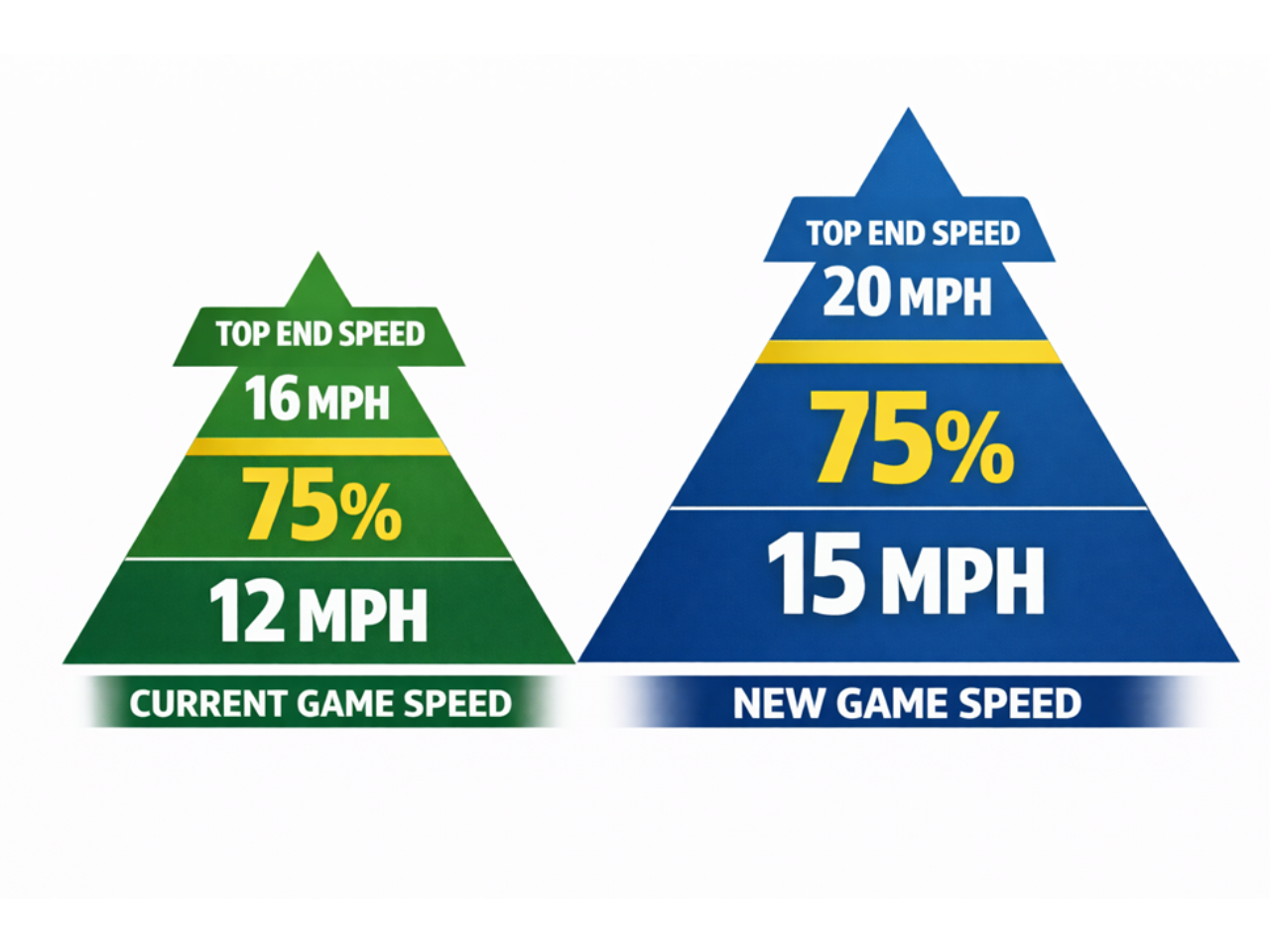
Soccer is typically played at about 70–75% of a player’s maximum speed. That doesn’t change whether you’re a youth player or a professional. What does change is how fast that 75% actually is.
Let’s break it down simply.
If a player’s top speed is 16 MPH, then their sustainable game speed (75%) is about 12 MPH. Now take another player who trains speed properly and raises their top speed to 20 MPH. That same 75% effort is now 15 MPH.
Both players are working at the same relative intensity, but one is covering more ground, closing space faster, and doing it with less strain on their system.
This is why coaches often say certain players “look effortless.” They aren’t working less, they’re just faster.
Speed Training Is a 2-for-1 Investment
This is where speed training becomes incredibly powerful. When you improve your top-end speed, you aren’t just getting faster—you’re simultaneously improving your conditioning. It’s a true two-for-one benefit. Rather than dividing training into separate “speed days” and “conditioning days,” speed training raises your performance ceiling while lowering the overall metabolic cost of playing the game. As your maximum speed increases, the demands of game speed feel easier, fatigue sets in less, recovery between sprints improves, and you’re able to maintain higher intensity deeper into matches.
In other words, you improve your conditioning without piling on extra mileage or subjecting your body to unnecessary high-volume impacts.
Why Speed Training Matches the Heart Rate Demands of Soccer
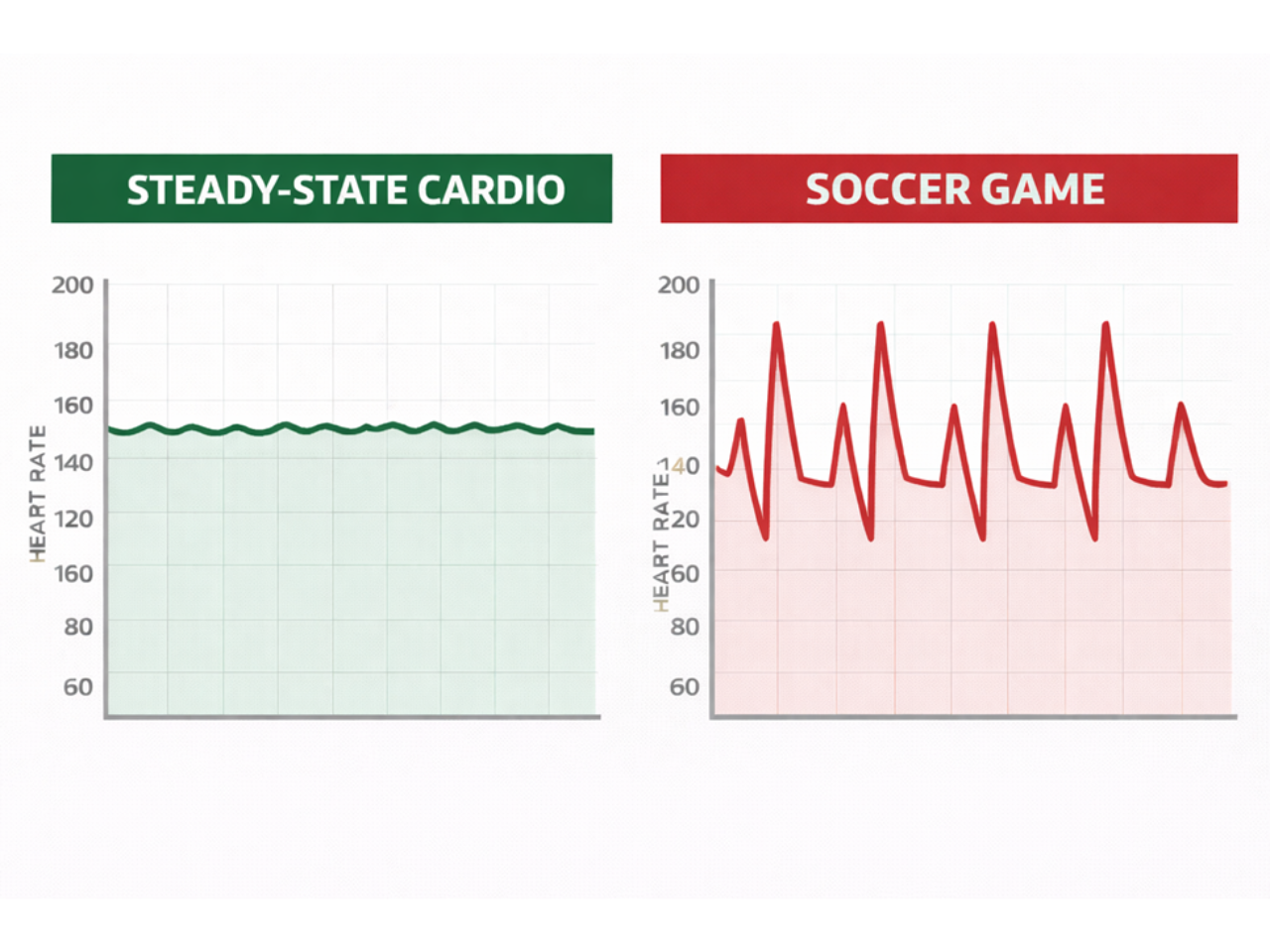
One misconception in soccer conditioning is assuming that steady-state cardio prepares you for match play. It doesn’t. In a real game, heart rate is constantly changing—it spikes during sprints, drops during jogs or walking, and then spikes again moments later. Soccer is a repeated cycle of explosion, recovery, and explosion again.
FAST Athletic's soccer specific speed training mirrors this demand perfectly. When you sprint at high intensity and allow proper recovery, your heart rate rises just like it does in a match, your body learns to recover more quickly between efforts, and your nervous system becomes more efficient at handling repeated high-intensity work. This ability to recover rapidly between sprints is what true soccer fitness looks like.
Steady-state cardio keeps heart rate relatively flat, but soccer demands peaks and valleys. If you don’t train the valleys, you won’t be able to survive the peaks.
Speed Is What Creates Big Plays
There will always be moments in a match when a player must reach absolute top speed, and those moments often decide the outcome and lead to really big plays.
Chasing down a through ball, tracking back defensively, pressing to force a turnover, or breakaways all demand true top-end speed. When speed shows up, it usually shows up when it matters most. The faster athlete arrives first, wins more 1v1’s, creates separation, and turns 50/50 situations into clear advantages. Speed isn’t just about looking fast, it’s about changing the game.
Conditioning for Soccer, Supported by Speed Training
If you want to last longer in matches, the goal isn’t simply to do more work, it’s to become a more capable athlete.
Speed training supports conditioning by raising your top gear, which makes game speed easier to sustain over long periods of time. It improves your ability to repeat high-intensity sprints, helps your heart adapt to the real demands of match play, and allows you to recover more efficiently between efforts. At the same time, it creates more high-impact moments on the field, where speed directly influences performance.
The takeaway is simple: faster players don’t just run more, they run faster with less effort. When the game feels easier, you don’t just survive the full 60-90 minutes, you play it better.
Train Faster. Play Longer. Perform Better.
If you’re ready to turn speed into your competitive advantage, FAST Athletics is where it starts. Their proven performance training programs focus on developing top-end speed, repeated sprint ability, and real-game conditioning that translates directly to match performance.
Whether you’re a youth player building your foundation or a competitive athlete chasing the next level, FAST Athletics provides the coaching, structure, and environment to help you move faster, recover quicker, and dominate late in games.
Learn more and start training with
FAST Athleticstoday!